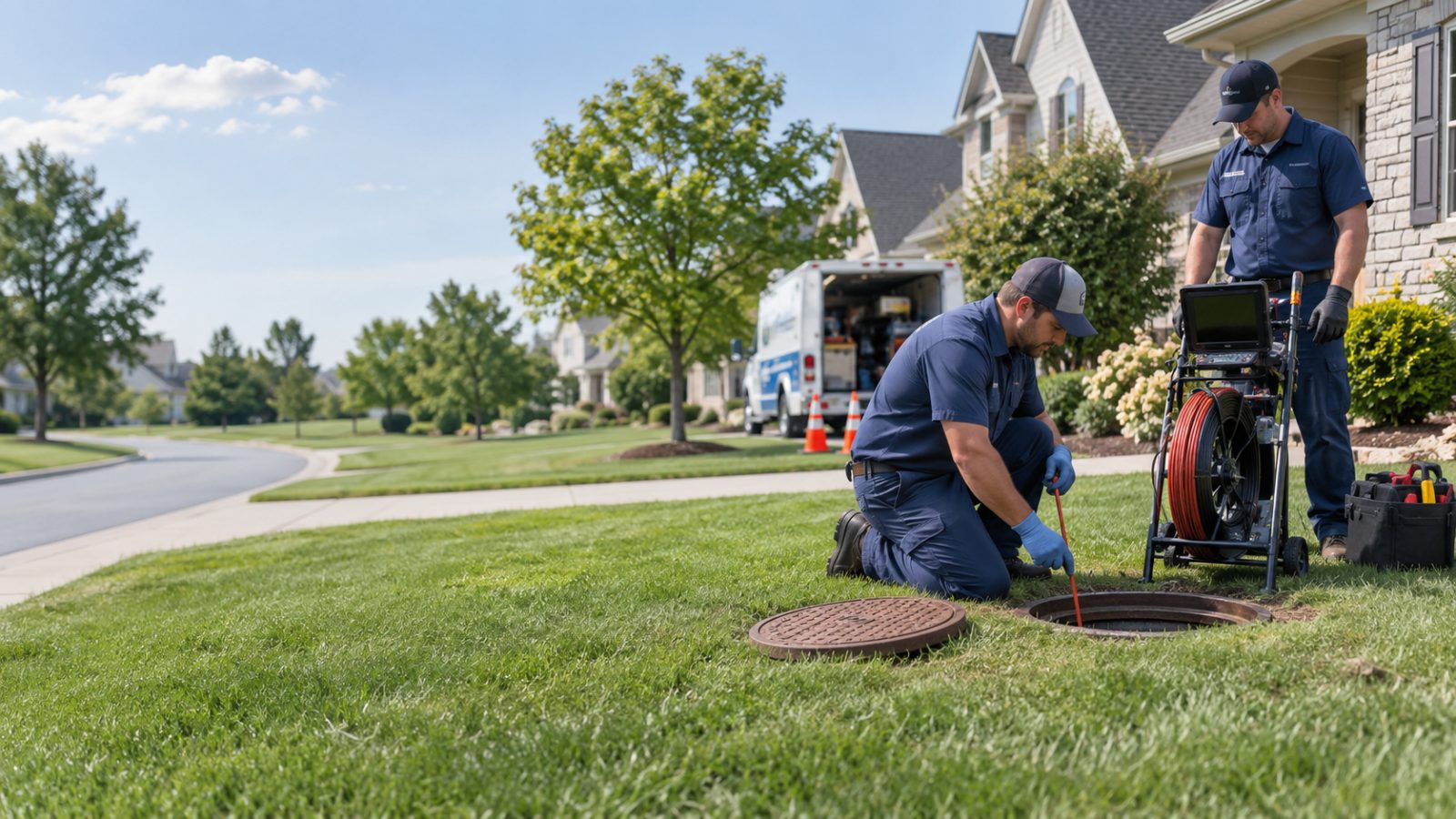
Local Sewer Line Help
Sewer Line Repair in Fort Wayne, Indiana
Tell us what is happening and request an estimate. Get a Free Estimate
Local Sewer Line Help
Tell us what is happening and request an estimate. Get a Free Estimate
A damaged sewer line can turn from an inconvenience into a serious property problem quickly. Slow drains throughout the house, repeated backups, sewer odors, wet areas in the yard, or wastewater coming up through a basement drain can all point to trouble in the main line. Fort Wayne Sewer Pros focuses on sewer line repair for property owners in Fort Wayne and communities across Northeast Indiana.
Our goal is to understand what has failed before recommending a repair. Sewer pipes can crack, separate, collapse, develop low spots, become obstructed by roots, or deteriorate with age. Different problems call for different solutions, so we explain what we find, discuss practical repair or replacement options, and help you choose a sensible way forward. If you are dealing with an active sewer problem, limit water use and contact us about the situation.
Our work covers collapsed sewer line repair, sewer line replacement, main sewer line repair, trenchless sewer line repair, broken sewer pipe repair, and emergency sewer line repair. Each one has its own section below, describing what the work involves, the conditions that shape it, and the questions that decide between a limited repair and a larger replacement. The right approach depends on pipe condition, depth, access, location, and the type of failure.
Many homeowners know something is wrong with their sewer but have little idea what is happening beneath the yard, driveway, or basement floor. A sewer backs up, someone gets it moving again, and the family is left wondering whether the problem is actually gone or simply waiting to return. Fort Wayne Sewer Pros is built around a simple idea: diagnose carefully, explain plainly, and avoid making a difficult situation more confusing than it already is.
The team stays focused on sewer line work rather than trying to be everything to everyone. Instead of covering every type of plumbing work, we concentrate on failed underground pipe: cracked lines, collapsed sections, major offsets, deteriorated sewer, replacement projects, and the excavation or trenchless approaches used to correct them. That narrower focus helps us give customers clear answers about damaged mains, collapsed pipe, replacement options, excavation, trenchless approaches, and urgent sewer failures.
Communication matters because most customers cannot see the pipe causing the problem. We keep the explanation practical: what appears to have failed, where the work is expected to happen, what the proposed repair addresses, and what you should expect as the project moves forward.
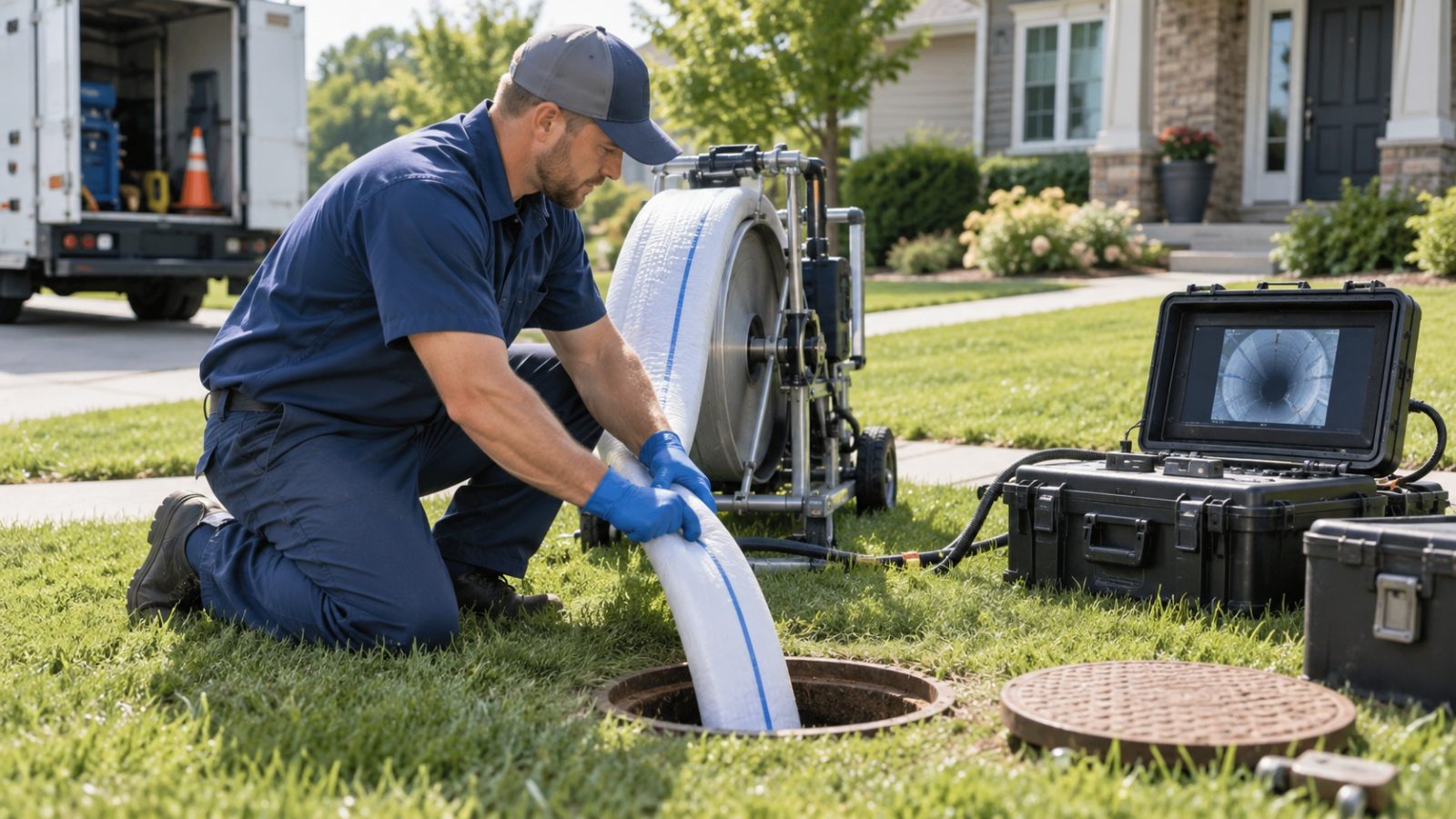
A collapsed sewer line is more serious than an ordinary clog. When part of the pipe has caved in, crushed, shifted badly, or deteriorated to the point that the opening is restricted, wastewater may no longer have a dependable path out of the property. The result can be repeated backups, drains that stop flowing, sewage at a basement floor drain, or persistent trouble that returns soon after the line is cleared. Collapsed lines require a structural solution, because simply reopening the pipe does not correct a section that has physically failed.
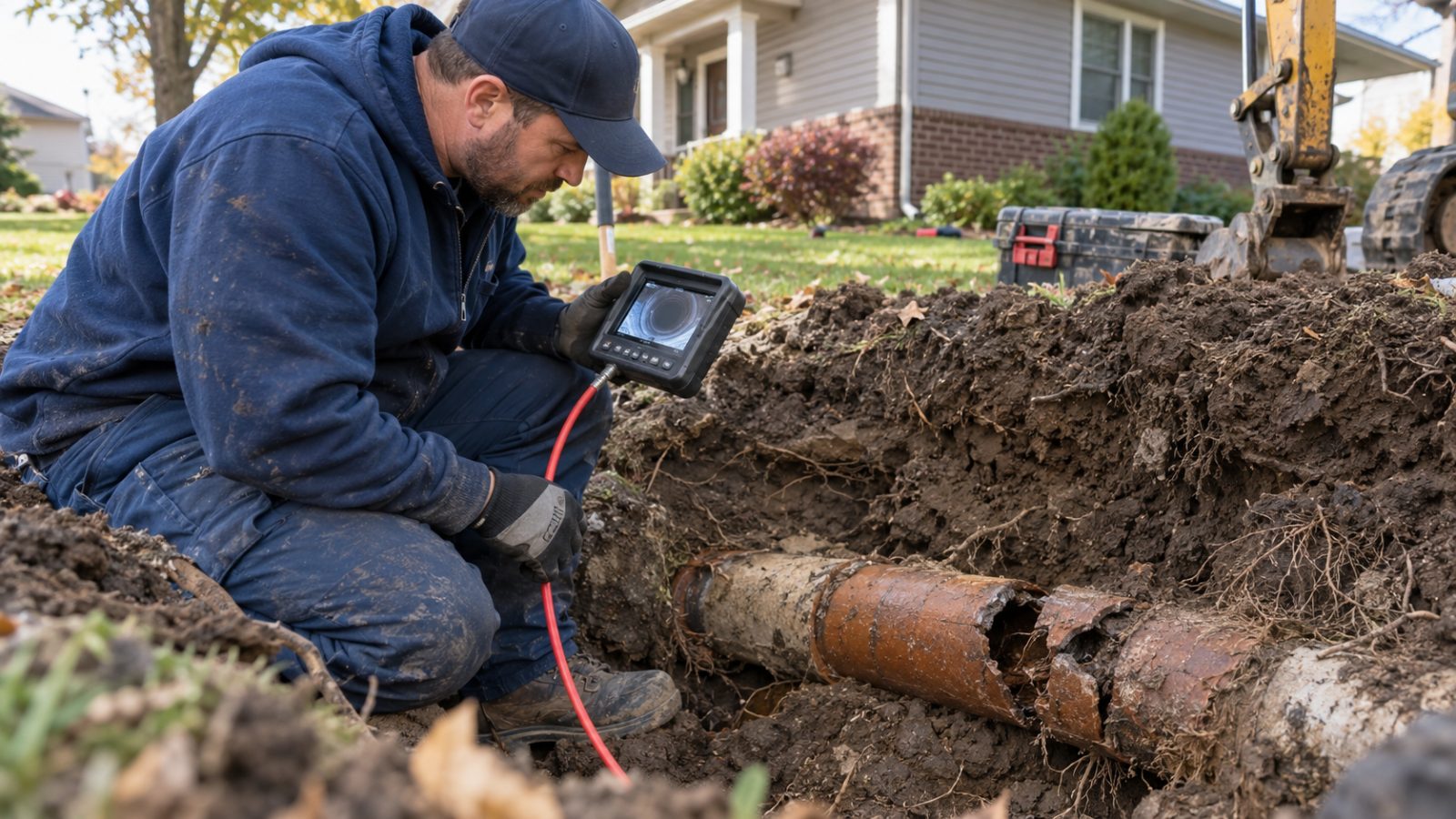
The first goal is to understand where the structural failure is and how much of the line is affected. A collapsed area needs to be identified as accurately as practical before excavation begins. Knowing where the failure sits helps reduce unnecessary digging and allows the repair plan to account for nearby foundations, driveways, landscaping, utilities, or other obstacles.
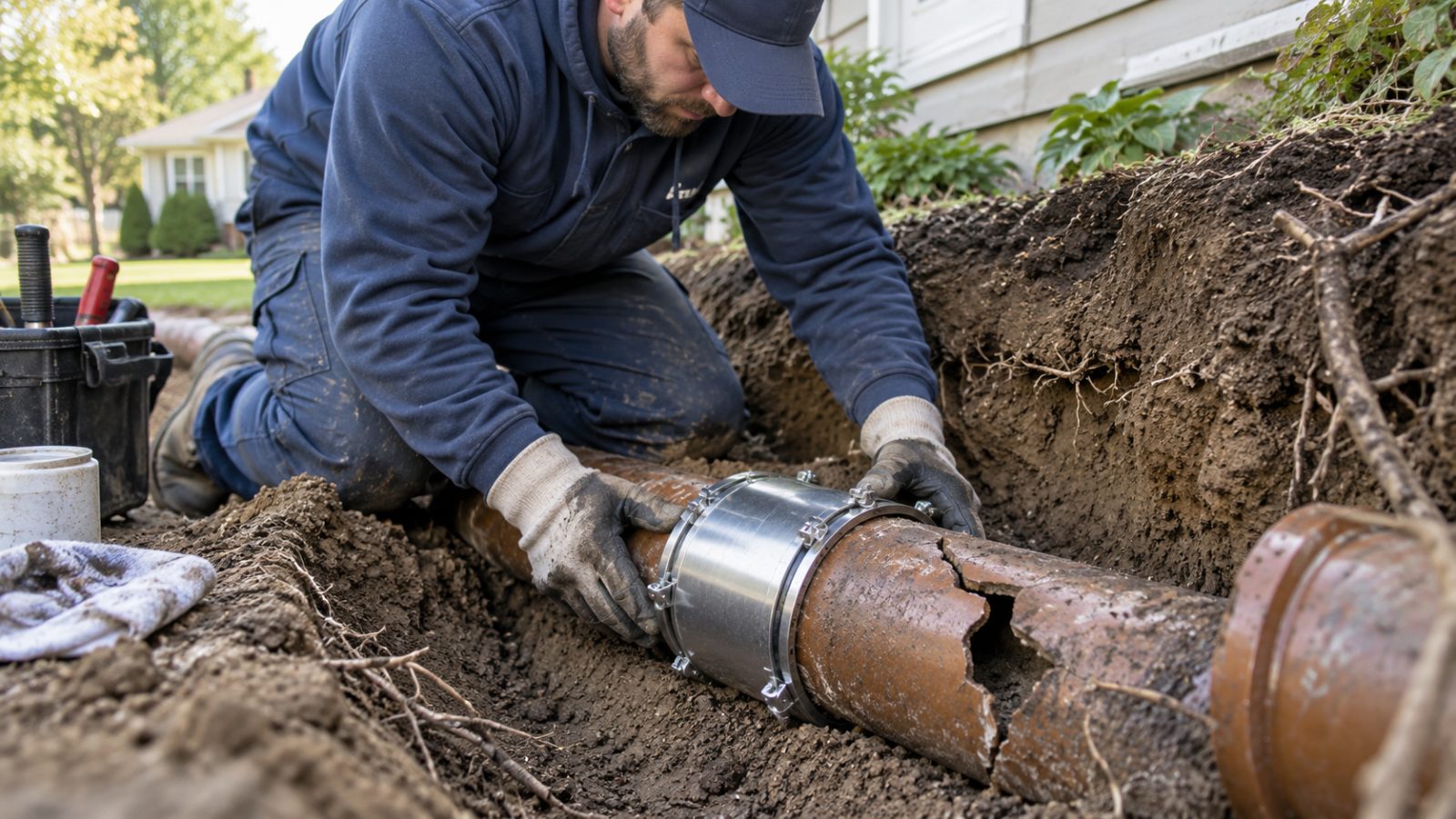
When one section has collapsed but the surrounding pipe remains serviceable, the failed area may be excavated, removed, and replaced, with the new section connected properly to the existing sewer so wastewater can flow without a severe offset or restriction. A visible collapse may also be one part of a larger deterioration problem. If nearby pipe is cracked, distorted, badly offset, or near the end of its useful life, replacing a longer section can make more sense than repairing one short point. When both deserve consideration, we explain the tradeoffs so you can make an informed decision.
Depth and location matter. A collapse beneath open lawn is different from one close to a foundation, under pavement, or in a tight side yard. We consider how the pipe can be reached safely and with as little unnecessary disturbance as practical. Collapsed sewer line pricing depends heavily on the depth and location of the failure, the amount of pipe being replaced, access for excavation, and restoration requirements, so we do not use one flat price for every property.
Sewer line replacement becomes worth considering when the existing pipe has widespread deterioration, repeated failures, multiple damaged areas, severe offsets, significant structural problems, or a history of repairs that have not solved the underlying issue. Instead of continuing to address one trouble spot after another, replacing the affected run can create a more dependable path from the building toward the public sewer or other connection point.
Not every project requires replacing the entire sewer run. When a substantial section is deteriorated but other portions remain serviceable, replacing the damaged stretch may provide a practical balance between repair and full replacement. When deterioration is extensive or problems are spread throughout the existing line, replacement of the larger run may be recommended, removing multiple known trouble areas in one planned project. We distinguish between damage that may justify a targeted repair and conditions that point toward replacement.
The goal of replacement is not simply to install new pipe. The new sewer needs a workable route, dependable connections, appropriate flow, and an installation plan that accounts for the property around it. Traditional replacement requires access to the pipe, so we consider the most practical route while accounting for structures, landscaping, pavement, fences, utilities, and working space. Some replacement projects may be candidates for a trenchless method, but suitability depends on the existing sewer, access, pipe alignment, and the nature of the failure.
Replacement work often involves connecting new pipe to an existing building sewer or another section that remains in place, and those transition points are an important part of the plan. Replacement costs are property-specific: pipe length, depth, excavation conditions, surface removal, access, material needs, and restoration scope can all change the project. We explain which section is being replaced, why that scope is proposed, and what site conditions may affect the work.
When several fixtures are affected at once, the problem may be in the main sewer line rather than an individual sink, toilet, or branch drain. Common warning signs include repeated lower-level backups, gurgling in multiple fixtures, several slow drains, sewage odors, or wastewater showing up in a basement floor drain when water is used elsewhere in the building. A main sewer line is a critical part of the property because most or all wastewater depends on it.
Main lines can fail because of cracks, separated joints, root intrusion associated with pipe defects, shifting soil, severe offsets, corrosion, deterioration, or complete structural collapse. Cracks can allow soil, roots, or groundwater to interact with the sewer and may worsen as the pipe ages or shifts. Pipe sections that no longer line up properly can restrict flow and create places where debris catches, and significant offsets may require direct access and replacement of the affected section. A fully or partially collapsed main may severely reduce or stop wastewater flow.
A backup that returns repeatedly deserves more than repeated symptom treatment. If a structural defect is causing the problem, correcting that defect may provide a more durable solution. The repair should be based on the actual condition of the line rather than the symptoms alone. Multiple-drain symptoms, backup locations, frequency, and previous sewer work help build a clearer picture, and we focus on narrowing down the damaged portion and understanding whether the defect is isolated or part of broader deterioration.
Fort Wayne-area properties range from older city lots to larger rural sites, so access and sewer layouts vary significantly. The location and depth of the damaged section, length of replacement, access, existing pipe material, and surface restoration all influence repair pricing. We discuss whether a limited repair appears reasonable or whether broader deterioration makes a larger replacement worth considering.
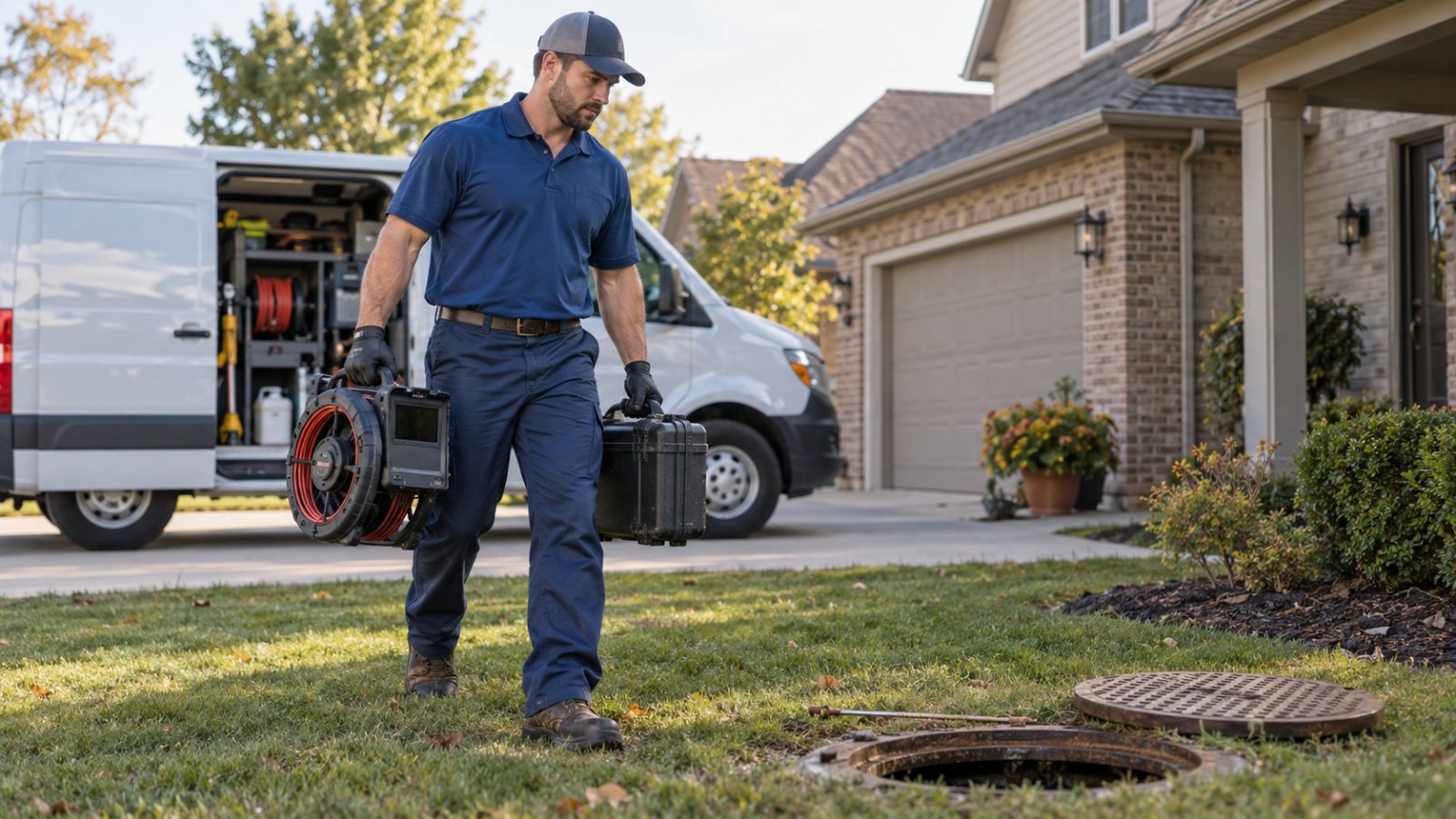
Trenchless sewer work can reduce the amount of open excavation needed for certain sewer line repairs or replacements. That can be especially appealing when the sewer crosses finished landscaping, a driveway, or another area where a long trench would create significant disruption. However, trenchless is a method, not a universal solution. The existing pipe condition, access points, alignment, type of failure, and surrounding utilities all matter.
A trenchless option is most useful when the sewer conditions support the method and reducing surface disturbance provides a meaningful benefit. The route and condition of the existing sewer influence whether a trenchless approach can be used; severe shifts, major offsets, or certain collapses may make direct excavation necessary. Access pits or other limited excavation may still be required even when trenchless work fits the project.
Different trenchless approaches serve different purposes, and the proposed method should match the structural condition and dimensions of the existing sewer rather than being selected simply to avoid digging. We do not assume trenchless is automatically better because it requires less surface excavation. If excavation offers a more dependable or appropriate repair for the conditions, we explain why.
Less excavation does not automatically mean the lowest-cost or simplest project. The appropriate trenchless method, sewer length, access, pipe condition, and site constraints affect pricing, and a site-specific evaluation is needed before comparing trenchless and traditional options. When both are reasonable, we discuss the differences in disruption and project scope so you can choose the approach that makes practical sense for the site.
A sewer line does not have to collapse completely to cause serious trouble. Cracks, fractures, separated joints, offsets, deteriorated pipe walls, and other structural defects can interfere with normal flow and contribute to repeated sewer problems. Some failures develop slowly, while others become obvious after a sudden backup or a section of line shifts.
Different defects behave differently underground. Cracks can range from limited defects to major structural damage, and their significance depends on severity, pipe material, location, and whether soil, roots, or groundwater are entering. Pipe joints can pull apart as surrounding soil moves or older materials deteriorate. When adjoining sections no longer align, the resulting ledge can restrict flow. Older pipe can weaken until portions fracture or lose structural integrity, and failures often occur where pipe materials change or where previous repairs connect to older sewer.
We focus on determining how much pipe is damaged and whether the surrounding line is sound enough for a limited repair. A short failed section may be repairable on its own, while widespread defects can make a larger replacement more practical. The repair is planned around the location and extent of the structural failure, and we determine whether a spot repair, longer section replacement, or another method is appropriate.
Repair pricing changes with pipe depth, material, accessibility, the number of defects, required replacement length, and the surfaces affected by excavation. A small broken-pipe repair, multiple damaged sections, and an extended pipe replacement are very different projects. We explain what the proposed repair addresses and what remains in place so you understand the scope. If you have been told your sewer pipe is cracked, offset, separated, or broken, that information is a useful starting point.
A sewer problem becomes especially urgent when wastewater is backing into living space, toilets and drains throughout the property cannot be used, sewage is surfacing, or a damaged main line has effectively put the building's plumbing out of service. In those situations, reducing water use and getting the problem evaluated quickly can help limit additional wastewater entering the failed system.
Avoid unnecessary water use when the main sewer is not draining. Sending more water into sinks, toilets, showers, appliances, or floor drains can increase the amount of wastewater reaching the backup. Keep people and pets away from contaminated areas and avoid unnecessary contact with wastewater. When the property's fixtures cannot discharge reliably, prompt evaluation helps establish the next practical step.
Emergency work still requires understanding the actual failure. A severe blockage, broken section, collapse, offset, or deteriorated sewer may produce similar symptoms, but the permanent repair can be very different. A structural failure may require direct repair before normal use can resume. Even when repairs are time-sensitive, location, depth, utilities, structures, and safe access still need to be considered before excavation. When a structural failure is responsible, the goal is to address the failed pipe rather than rely on a temporary workaround.
Urgent sewer repair costs depend on the same physical factors as planned repairs, including depth, location, pipe damage, access, replacement length, and restoration requirements. For an active sewer backup or severe line failure, tell us where sewage is appearing, which fixtures are affected, and whether the property has usable drainage. Availability depends on scheduling and site conditions.
We do not publish dollar amounts for sewer work. There is not one reliable price for every sewer repair, because depth, pipe material, failure type, excavation access, repair length, surface conditions, and restoration needs vary greatly. A shallow isolated repair in an open yard is a different project from a deep replacement beneath pavement or near structures. Pricing depends on what an evaluation of the line and the site finds.
The table below lists the kinds of work described on our service pages and the factors that shape each one. Every row is a category of work, not a quote. The estimate is free and is based on the property, not on a number listed in advance.
| Kind of work | What shapes the price | Cost |
|---|---|---|
| Localized collapsed-line repair | Depth, access, and repair length | Estimate after site evaluation. Free estimate. |
| Longer section replacement | Pipe length and site conditions | Estimate after site evaluation. Free estimate. |
| Difficult-access excavation | Obstacles and restoration needs | Estimate after site evaluation. Free estimate. |
| Partial sewer line replacement | Length, depth, and access | Estimate after site evaluation. Free estimate. |
| Long sewer line replacement | Route and project conditions | Estimate after site evaluation. Free estimate. |
| Main line spot repair | Failure location and depth | Estimate after site evaluation. Free estimate. |
| Main line section replacement | Length and access | Estimate after site evaluation. Free estimate. |
| Trenchless repair or replacement option | Method, line conditions, length, access requirements | Estimate after suitability review. Free estimate. |
| Small broken-pipe repair | Depth and location | Estimate after site evaluation. Free estimate. |
| Multiple damaged sections | Number and length of repairs | Estimate after site evaluation. Free estimate. |
| Urgent spot repair or section replacement | Failure, depth, access, replacement length | Estimate based on site conditions. Free estimate. |
These rows describe kinds of jobs, not quoted prices. When you review an estimate, ask which section is being repaired or replaced, what remains in place, and what surface restoration is included in the scope. Request an estimate and describe what your drains and sewer line are doing.
The repair path follows the same shape across our services. It is a sequence of conversations and checks, not a single sentence about a simple process. What changes from job to job is the type of failure, the depth and route of the pipe, and the property around it.
Start with the symptoms: backups, slow drains, gurgling fixtures, sewer odors, wet areas in the yard, or sewage at a basement or lower-level drain. Say which fixtures are affected, where the backup appears, and how often it happens.
If sewage is backing up now, reduce or stop water use, keep people and pets away from contaminated areas, and say so when you contact us.
Previous clearing attempts, earlier repairs, and anything you have been told about the line help build a clearer picture. Recurring backups can happen when clearing removes an immediate obstruction but an underlying defect remains.
If you have already been told the pipe is cracked, offset, separated, collapsed, or broken, share that information too.
The objective is to narrow down the affected section and understand the condition of the surrounding sewer line. That distinguishes an isolated break from a larger pattern of deterioration.
Locating the failure as accurately as practical before excavation helps reduce unnecessary digging and lets the plan account for foundations, driveways, landscaping, and utilities.
We discuss whether a spot repair, a longer section replacement, a full replacement, or a trenchless method fits the pipe and the property. Pipe condition, depth, alignment, access, and surrounding structures decide which options are realistic.
The estimate explains which section is included, why that scope is proposed, and what restoration is covered. Approval comes before work begins.
The failed pipe is repaired or replaced using the method agreed for the site, with connections made to restore a continuous wastewater path to the portions of the sewer that remain in service.
If the work reveals something outside the agreed scope, it is discussed rather than added silently.
Excavation or access areas are closed and the restoration included in the project is completed according to the agreed scope.
We explain what the repair addressed and what remains in place, so you know what was done and why.
Our primary service area is Fort Wayne, with additional sewer line service available in New Haven, Huntertown, Leo-Cedarville, Auburn, Roanoke, and Decatur. Properties across Northeast Indiana vary considerably, from older city neighborhoods with mature trees and aging sewer laterals to newer homes with different pipe materials and longer runs.
Local soil conditions, property access, street and alley layouts, landscaping, and the age of the home can all affect how a sewer repair is approached. We look at the conditions at the property instead of assuming every failed sewer line should be handled the same way. Include the property city when you request an estimate.
Our work centers on damaged and failing sewer lines, so the conversation stays focused on the underground problem you actually need solved.
We explain the likely failure, the proposed work, and the practical differences between repair and replacement without burying you in technical language.
Pipe depth, material, damage, access, and surrounding structures matter. We consider those conditions before recommending excavation, replacement, or a trenchless approach.
Sewer work can be disruptive. We plan access carefully and aim to limit unnecessary disturbance wherever the repair method and site allow.
We work in Fort Wayne and nearby Northeast Indiana communities, with their mix of older neighborhoods, rural properties, and newer development.
When a structural defect is behind the problem, the goal is to correct the failed pipe rather than rely on repeated symptom treatment.
Repeated backups, several slow drains at once, sewage odors, unusual gurgling, or wastewater appearing at a basement drain can indicate a main sewer problem. A proper evaluation is needed because similar symptoms can have different causes.
Sometimes. If the damage is limited to one section and the rest of the line is in usable condition, a targeted repair may make sense. Widespread deterioration, multiple failures, or a collapsed line may make replacement the better long-term option.
Trenchless methods may be an option when the existing line and property conditions are suitable. We consider the pipe condition, access points, alignment, and the type of failure before recommending a trenchless approach.
No. Trenchless work can reduce surface disturbance, but the pipe must be suitable for the method being considered. Severe collapses, alignment problems, access limitations, or other conditions can make traditional excavation the more practical repair.
No. Some problems can be handled by excavating one specific section, and certain properties may be suitable for trenchless methods that reduce the amount of open excavation. Other failures require a longer trench because of the pipe condition, alignment, or location. The repair method depends on what has actually failed.
Roots commonly take advantage of openings such as cracked pipe or leaking and separated joints. Once roots enter, they can contribute to restrictions and recurring problems. Simply removing roots does not repair an opening or structural defect that allowed them into the line.
Recurring backups can happen when clearing removes an immediate obstruction but an underlying pipe defect remains. Cracks, offsets, roots entering through defects, deteriorated pipe, low areas, or partial collapse can all contribute to repeat trouble. When backups keep returning, examining the condition of the sewer itself is an important next step.
There is not one reliable price for every sewer repair because depth, pipe material, failure type, excavation access, repair length, surface conditions, and restoration needs can vary greatly. We provide project-specific estimates rather than presenting one price as typical for every property.
Stop using water as much as possible so additional wastewater is not sent into the blocked or damaged line. Keep people and pets away from contaminated areas and arrange for the sewer problem to be evaluated promptly.
Not sure whether you need a repair or replacement? Start by telling us what your drains and sewer line are doing.
Free — no obligations